The Rising Role of Dice Icon in Modern Web Design and Branding
In today's fast-evolving digital landscape, visual elements play a crucial role in communication, branding, and user experience. Among the growing array of design assets, the Dice Icon has emerged as a versatile and meaningful symbol. Whether used in web design, templates, or infographics, the Dice Icon offers a unique blend of simplicity, symbolism, and adaptability. This article explores what the Dice Icon is, how it's being used across industries, and why it's gaining traction among professionals, creators, and entrepreneurs alike.
Understanding the Dice Icon
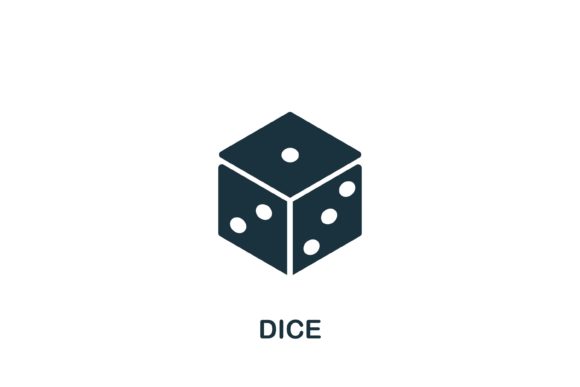
The Dice Icon is a stylized representation of a traditional six-sided die, often simplified into a monochrome or minimalistic design. It is commonly used as a symbol in various contexts, including gaming, probability, chance, and decision-making. As a design element, the Dice Icon can be delivered in multiple formats—most commonly as an EPS file or a JPG file, making it easy to edit, scale, and integrate into digital and print projects.
Its vector-based format ensures that the icon maintains clarity across different resolutions, which is essential for modern web and mobile applications. Designers can easily customize the Dice Icon to match brand colors, themes, or layout requirements, making it a flexible asset for a wide range of creative and professional uses.
Why the Dice Icon Matters in Today's Design Landscape
Visual symbolism is more important than ever in an age where attention spans are short and digital content is abundant. The Dice Icon serves as a powerful visual metaphor, representing concepts such as randomness, opportunity, and calculated risk. These themes resonate deeply in industries ranging from finance and marketing to gaming and entrepreneurship.
- Gaming and Entertainment: In the gaming sector, the Dice Icon is a familiar and intuitive symbol. It’s used in game interfaces, promotional materials, and mobile apps to convey gameplay mechanics and themes of chance.
- Business and Decision-Making: Entrepreneurs and business professionals often use the Dice Icon to illustrate risk assessment, strategic choices, and innovation. It's a visual shorthand for taking calculated risks in a competitive environment.
- Data Visualization: Infographics and dashboards use the Dice Icon to represent probability, variability, or random sampling in data sets.
As visual storytelling becomes more central to branding and communication, the Dice Icon provides a clean, recognizable image that can be adapted to convey complex ideas quickly and effectively.
How Trends in Design and Technology Are Driving Its Popularity
Several key trends in design, technology, and user behavior are contributing to the rising popularity of the Dice Icon:
- Minimalism in Design: The trend toward clean, uncluttered interfaces favors simple, symbolic icons like the Dice Icon. Its geometric shape and clear visual meaning make it ideal for modern UI/UX design.
- Responsive Web Design: With the need for websites to function seamlessly across devices, scalable vector graphics (SVGs) and high-quality EPS files are essential. The Dice Icon, when delivered in these formats, ensures consistency and clarity on all screens.
- Brand Personalization: Brands are increasingly looking for visual elements that reflect their personality and values. The Dice Icon can be used to signal innovation, risk-taking, or creativity—traits that resonate with modern audiences.
- Content Marketing: Infographics and visual content are central to digital marketing strategies. The Dice Icon is a useful tool for illustrating concepts related to chance, decision-making, and outcomes in a visually engaging way.
These trends are not only shaping how the Dice Icon is used but also expanding the contexts in which it appears. From startup pitch decks to financial reports and social media graphics, the Dice Icon is proving to be a surprisingly versatile visual asset.
Practical Applications Across Industries
Let’s take a closer look at how different industries are incorporating the Dice Icon into their digital and print materials:
1. Web Design and Templates
Modern web design emphasizes clarity, functionality, and aesthetic appeal. The Dice Icon can be used in navigation menus, call-to-action buttons, or as part of interactive elements. For example, a decision-making tool or a quiz website might use the Dice Icon to represent a "randomize" function or a "try your luck" feature.
2. Branding and Identity
Some brands, particularly those in the innovation, finance, or gaming sectors, incorporate the Dice Icon into their logos or visual identity. It conveys a sense of boldness and forward-thinking, aligning with companies that encourage calculated risk-taking and exploration.
3. Educational Content and E-Learning
Educational platforms and e-learning tools often use the Dice Icon to illustrate probability, statistics, or gamified learning experiences. Its use helps simplify complex ideas and makes learning more engaging for users of all ages.
4. Marketing and Advertising
In marketing campaigns, the Dice Icon can be used to promote limited-time offers, giveaways, or contests. Phrases like “roll the dice” or “take a chance” become more impactful when paired with a visual cue that users instantly recognize.
Why Professionals Are Choosing the Dice Icon
Professionals across various fields are increasingly recognizing the value of the Dice Icon—not just for its visual appeal, but for its ability to communicate deeper meaning with minimal effort. Here are a few reasons why it's becoming a go-to design element:
- Universality: The Dice Icon is a globally recognized symbol, making it accessible across cultures and languages.
- Flexibility: Whether used in monochrome or color, as a standalone graphic or part of a larger illustration, the Dice Icon adapts well to different design contexts.
- Scalability: When provided as an EPS file or SVG, the Dice Icon can be scaled without losing quality, making it suitable for everything from mobile apps to large-format print media.
- Emotional Resonance: The icon evokes feelings of excitement, uncertainty, and possibility—emotions that brands and content creators aim to tap into when engaging their audience.
For freelancers and designers working on tight deadlines, the ease of use and editability of the Dice Icon (especially in EPS and JPG formats) makes it a practical choice for rapid deployment across multiple platforms.
Looking Ahead: The Future of Icon-Based Communication
As digital communication becomes more visual and intuitive, the role of icons like the Dice Icon will only grow. With the rise of AI-driven design tools, dynamic content generation, and real-time data visualization, icons are evolving from static images to interactive, context-aware elements.
Future iterations of the Dice Icon may include animated versions for web use, integration with voice interfaces, or even augmented reality applications where the icon represents real-time decision-making in immersive environments. As design systems become more modular and component-based, the Dice Icon could serve as a reusable, customizable asset across platforms and devices.
Moreover, as businesses continue to prioritize agile workflows and user-centric design, icons that convey meaning quickly and clearly will be in high demand. The Dice Icon, with its strong visual identity and conceptual depth, is well-positioned to meet that demand.
Conclusion: A Simple Icon with Strategic Impact
The Dice Icon may seem like a small design element, but its impact is far-reaching. From enhancing user interfaces to symbolizing risk and reward in business contexts, this simple graphic offers a powerful way to communicate complex ideas. Whether you're a marketer, designer, entrepreneur, or educator, the Dice Icon is a valuable addition to your visual toolkit.
With its availability in high-quality formats like EPS and JPG, the Dice Icon is not only easy to use but also adaptable to a wide range of creative and professional needs. As visual communication continues to evolve, the Dice Icon stands out as a timeless, relevant, and meaningful design asset that speaks to the modern digital world.